Standard tin can dimensions are a cornerstone of the global packaging industry, impacting everything from food preservation and distribution to industrial material storage and even emergency aid efforts. Understanding these dimensions isn't merely a technical exercise; it’s crucial for optimizing supply chains, ensuring product compatibility, and maximizing logistical efficiency across diverse sectors. Proper consideration of standard tin can dimensions allows for automated filling lines, standardized palletization, and minimized waste, ultimately reducing costs and environmental impact.
The relevance of standardized can sizes extends far beyond commercial applications. In humanitarian contexts, consistent dimensions simplify warehousing, transportation, and distribution of essential goods like food, medical supplies, and clean water. International organizations and NGOs rely heavily on these standards to quickly and effectively deliver aid to populations in need, particularly during disaster relief operations. The ability to seamlessly integrate cans into existing logistical infrastructure is a critical factor in ensuring timely assistance.
Furthermore, the evolution of standard tin can dimensions is continually shaped by advancements in materials science, manufacturing technology, and consumer demands. This ongoing adaptation necessitates a clear understanding of current standards and emerging trends to maintain competitiveness and meet evolving market needs. Accurate knowledge of these dimensions is vital for businesses, governments, and aid organizations alike.
The Importance of Standard Tin Can Dimensions
The standardization of tin can dimensions offers remarkable efficiencies in manufacturing, transportation, and storage. Without these standards, the logistical complexities and costs associated with packaging would increase dramatically. This standardization enables economies of scale, reducing production costs and facilitating smoother supply chain operations. Understanding standard tin can dimensions is the foundation for a streamlined packaging process.
Moreover, standard sizes ensure compatibility with automated filling and labeling equipment. This automation significantly boosts production speed and reduces labor costs. From small-scale artisanal producers to large-volume industrial manufacturers, leveraging standardized can dimensions is vital for maintaining a competitive edge in today's fast-paced market.
Global Relevance and Industry Context
Globally, the canned food industry is a multi-billion dollar market, impacting food security and trade across continents. Data from the UN Food and Agriculture Organization (FAO) highlights the critical role of canned goods in preventing food waste and extending shelf life, especially in regions with limited refrigeration infrastructure. Standard tin can dimensions are therefore intrinsically linked to global food distribution networks.
The International Organization for Standardization (ISO) plays a role in defining material standards for can production, while industry associations like the Can Manufacturers Institute (CMI) work to promote best practices and ensure consistency in dimensions. These organizations strive to create a unified framework for can manufacturing worldwide, minimizing compatibility issues and optimizing logistical flows.
A significant challenge exists in balancing the need for standardization with the demand for innovative packaging solutions. While maintaining consistency is crucial, there’s also a push for lighter-weight cans, improved barrier properties, and more sustainable materials. Adapting standard tin can dimensions to accommodate these innovations requires careful consideration and collaboration between industry stakeholders.
Defining Standard Tin Can Dimensions
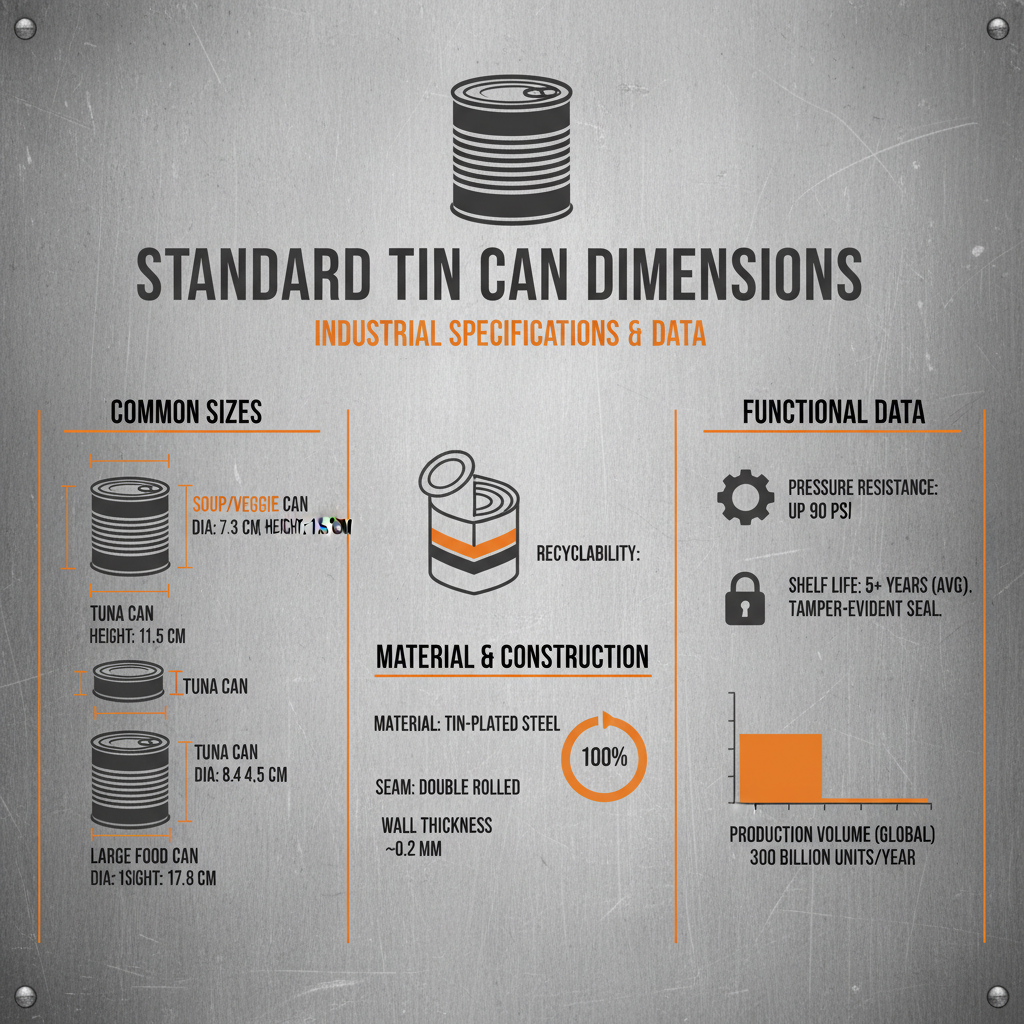
Standard tin can dimensions refer to a set of established measurements for the diameter, height, and wall thickness of metal cans used for food, beverages, and other products. These dimensions are typically expressed in inches or millimeters and are categorized based on can size, ranging from small 'soup' cans to large 'gallon' cans. The precise specifications are designed to ensure structural integrity, proper sealing, and compatibility with filling and processing equipment.
The definition of these dimensions isn't static. It has evolved over time in response to technological advancements and changing market demands. Factors like the strength of the metal alloy, the intended contents, and the processing methods all influence the optimal can dimensions. Today, we often see a move towards lighter-gauge steel for cost savings, requiring precise engineering to maintain structural integrity.
These standardized dimensions are not simply about size; they’re also connected to broader industrial needs. They enable automated production lines, standardized pallet loading for transport, and efficient storage in warehouses. In essence, standard tin can dimensions are a fundamental component of modern supply chain management and are vital for facilitating the safe and efficient delivery of goods worldwide.
Key Factors Influencing Tin Can Dimensions
Durability is a prime factor in determining tin can dimensions. The can must withstand the rigors of processing, handling, transportation, and storage without compromising the integrity of the contents. Wall thickness, seam strength, and material composition all play critical roles in achieving the required durability.
Scalability is also key. Standardized dimensions allow for flexible production runs and easy adaptation to fluctuating demand. Manufacturers can readily adjust output without retooling their entire production line. This scalability is particularly important in industries with seasonal peaks or unpredictable market conditions.
Impact of Material Strength on standard tin can dimensions
Applications Across Industries and Regions
The food and beverage industry is, of course, the largest consumer of tin cans, utilizing a wide range of standard tin can dimensions for products ranging from soups and vegetables to fruits, meats, and beverages. Regions with limited refrigeration infrastructure, such as parts of Africa and Asia, rely heavily on canned goods for food security.
Beyond food, tin cans are also used extensively in the industrial sector for packaging paints, coatings, adhesives, and other chemicals. Their robust construction and hermetic sealing properties make them ideal for containing these potentially hazardous materials. In post-disaster relief operations, standardized tin cans are used to package and distribute essential supplies such as clean water and ready-to-eat meals.
Advantages and Long-Term Value Proposition
The consistent use of standard tin can dimensions delivers significant cost savings through optimized production, transportation, and warehousing. These savings translate into lower prices for consumers and increased profitability for manufacturers. Furthermore, the recyclability of tinplate steel contributes to a more sustainable packaging system.
Tin cans offer superior product protection, preserving the quality and safety of contents for extended periods. This reliability builds consumer trust and reduces food waste, contributing to both economic and environmental benefits. The inherent strength of metal cans provides a robust barrier against light, oxygen, and moisture, extending shelf life and preserving nutritional value.
From a social impact perspective, standardized tin can dimensions enable efficient distribution of essential goods to vulnerable populations, supporting food security and public health initiatives globally. They promote dignity and well-being by ensuring access to safe and reliable food supplies.
Future Trends and Innovations in Can Dimensions
Lightweighting remains a key trend in can manufacturing, with ongoing research focused on developing thinner but equally strong tinplate alloys. This reduces material costs and lowers the environmental impact of transportation. Digital printing technologies are also being integrated into can production, allowing for customized designs and reduced lead times.
The drive towards sustainability is leading to increased exploration of alternative coating materials and renewable energy sources in can manufacturing. Automation and robotics are streamlining production processes, further improving efficiency and reducing labor costs. These innovations are all influencing the evolution of standard tin can dimensions.
Smart packaging solutions, incorporating QR codes or NFC tags on cans, are emerging as a way to enhance traceability, provide product information to consumers, and combat counterfeiting. These technologies add another layer of value to the traditional tin can, solidifying its role in the modern packaging landscape.
FAQS
The most common standard tin can dimensions for food packaging include diameters of 58mm, 73mm, 87mm, and 99mm, with heights varying based on the capacity needed. These dimensions are widely adopted for canned vegetables, fruits, soups, and other processed foods. Adhering to these standards ensures compatibility with automated filling lines and efficient palletization for transport, reducing costs and streamlining the supply chain.
Variations in steel grade directly impact the required dimensions of a tin can to maintain structural integrity. Higher-strength steel allows for thinner can walls, reducing material usage and weight, while still providing adequate protection. Conversely, lower-grade steel requires thicker walls for comparable durability. Manufacturers carefully adjust dimensions based on the chosen steel alloy to ensure the can can withstand processing, handling, and storage stresses.
New food safety regulations often necessitate adjustments to can coatings and sealing materials, which can indirectly impact standard tin can dimensions. For example, regulations restricting the use of BPA in can linings have led to the adoption of alternative coatings that may require slightly altered can dimensions to ensure proper adhesion and prevent leaching. Compliance with these regulations is paramount for ensuring product safety and consumer trust.
While a significant degree of standardization exists, some regional differences in standard tin can dimensions can occur, largely due to historical factors and variations in packaging preferences. For example, metric dimensions are more prevalent in Europe, while imperial units are still common in the United States. However, global manufacturers typically produce cans to meet a range of standards to accommodate diverse market needs.
Manufacturers ensure compatibility with automated filling equipment by adhering to established industry standards for can dimensions and tolerances. Careful communication with equipment suppliers and regular quality control checks are crucial. Adjustable filling heads and change parts are often used to accommodate a range of can sizes. Precise dimensional accuracy and consistent can quality are essential for smooth and efficient operation.
Optimizing can dimensions for specific product types requires careful consideration of factors such as product density, viscosity, and sensitivity to oxygen or light. For example, highly acidic foods require more robust coatings and potentially thicker can walls to prevent corrosion. Products susceptible to oxidation may benefit from smaller can sizes to minimize headspace. Proper sizing ensures optimal product protection and shelf life.
Conclusion
In conclusion, standard tin can dimensions are far more than just measurements; they are a critical enabler of global trade, food security, and efficient supply chain management. From ensuring product safety and extending shelf life to facilitating automated production and sustainable practices, these standards underpin a vast and complex industry. Understanding and adapting to the evolving landscape of can dimensions is essential for success in today's competitive market.
Looking ahead, continued innovation in materials science, manufacturing technology, and packaging design will drive further refinement of standard tin can dimensions. Embracing sustainability, exploring smart packaging solutions, and fostering collaboration across the industry will be crucial for maximizing the long-term value and relevance of this enduring packaging format. Visit our website at www.packaging-help.com to learn more about optimizing your packaging solutions.