Paint can sizes, a seemingly simple aspect of the coatings industry, are fundamentally crucial to efficiency, safety, and cost-effectiveness across a wide spectrum of applications. Understanding the nuances of these sizes – from the smallest sample pots to the large industrial containers – is essential for manufacturers, retailers, consumers, and even sectors like construction and disaster relief. The correct paint can size directly impacts material waste, storage logistics, application ease, and ultimately, project success.
Globally, the demand for paints and coatings is consistently rising, driven by growth in construction, infrastructure development, and automotive industries. According to industry reports, the global paints and coatings market was valued at USD 189.23 billion in 2023 and is projected to reach USD 242.39 billion by 2030. This growth necessitates a deep understanding of optimized packaging, with paint can sizes playing a central role. Standards like those set by ISO and ASTM impact can design and sizing, ensuring product integrity and safe handling.
The challenge lies in navigating the diverse requirements of different applications and regions. A one-size-fits-all approach isn’t viable. Factors like project scale, paint type (water-based, oil-based, specialty coatings), and transportation regulations all contribute to the complexity of selecting the appropriate paint can size. Proper consideration of these elements ensures minimal waste, reduced environmental impact, and optimized performance.
Introduction to Paint Can Sizes
Paint can sizes aren't merely about volume; they represent a careful balance between material usage, transportation efficiency, and usability for the end consumer or professional applicator. Different can sizes cater to various project scales, from small DIY touch-ups requiring a pint or quart, to large-scale industrial coatings needing five-gallon buckets or even larger drums. The correct size minimizes waste and contributes to a more sustainable approach.
The selection process for paint can sizes is further complicated by paint chemistry. Different paint formulations – such as oil-based, water-based, epoxy, or polyurethane – might require specific can coatings to prevent corrosion or reaction with the packaging material. Choosing the appropriate can size and material ensures the paint’s integrity and extends its shelf life, directly impacting its performance and value.
Defining Paint Can Sizes
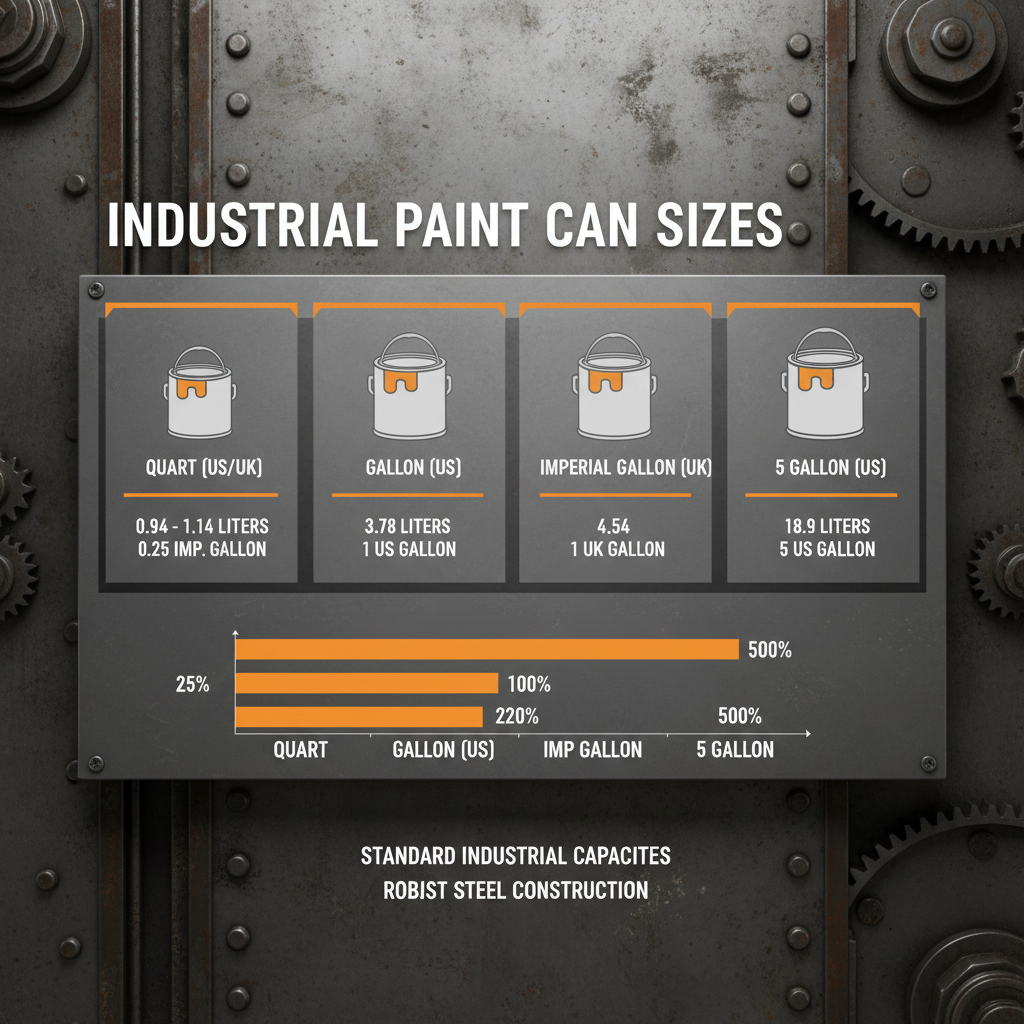
Paint can sizes are standardized to a degree, though regional variations exist. In the US, common sizes include 1/2 pint (8oz), 1 quart (32oz), 1 gallon (128oz), and 5-gallon (640oz) buckets. These sizes are typically used for latex and oil-based paints. Industrial applications often employ larger containers, such as 55-gallon drums or even IBC totes (Intermediate Bulk Containers) holding 275-330 gallons. The size chosen depends heavily on the volume of paint needed and the method of application.
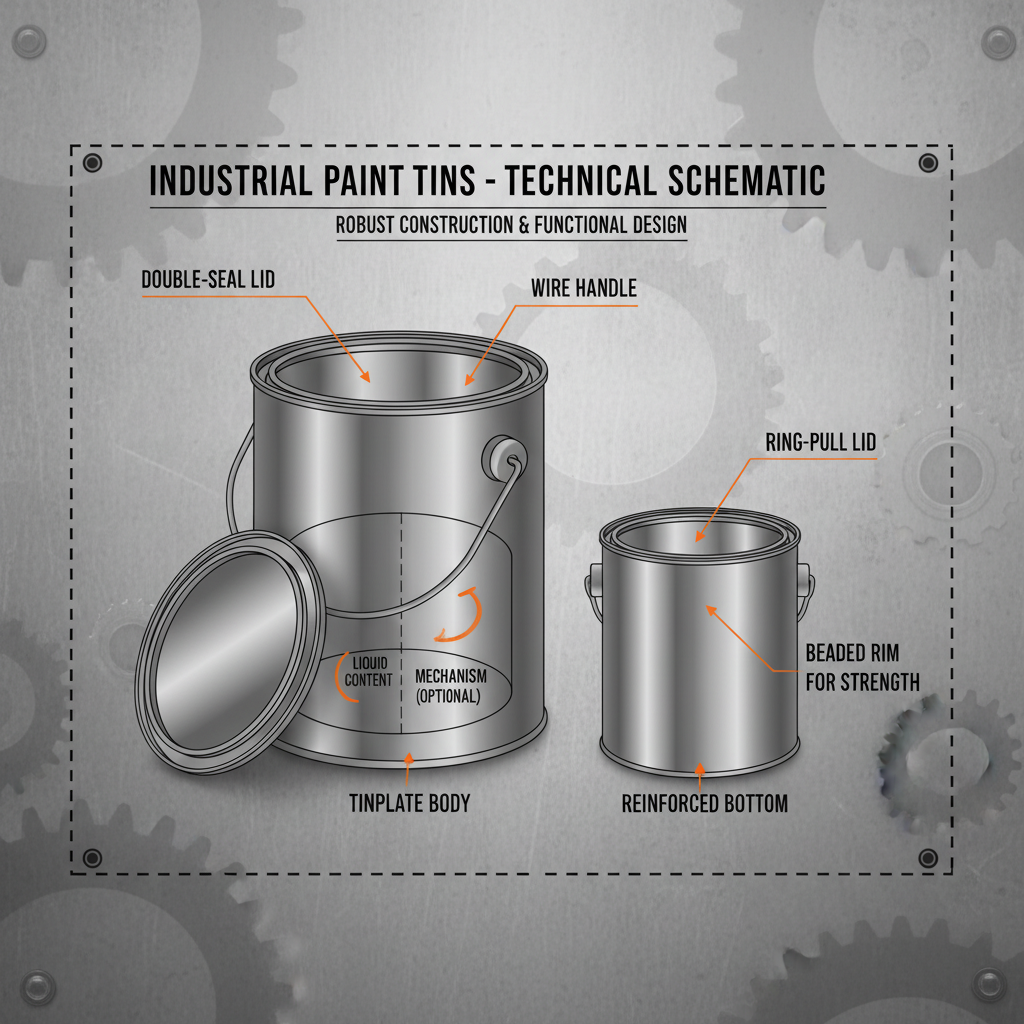
Beyond volume, can dimensions – height, diameter, and wall thickness – also play a crucial role. These dimensions influence the can’s structural integrity, resistance to denting, and ease of handling. Manufacturers carefully engineer these parameters to ensure safe transportation and storage, preventing leaks and maintaining product quality. paint can sizes are dictated by regulatory standards and industry best practices.
The definition also extends to the type of can itself. Traditional metal cans (typically steel or tinplate) are still widely used, but plastic pails and containers are gaining popularity, particularly for water-based paints, due to their lighter weight and corrosion resistance. The choice of material impacts the overall cost, environmental footprint, and recyclability of the packaging.
Key Factors Influencing Paint Can Size Selection
Several key factors dictate the optimal paint can size for a given application. First, project scope is paramount. A small bathroom remodel will clearly require a smaller can than painting an entire house or a commercial building. Estimating the required paint volume accurately minimizes waste and ensures sufficient coverage.
Second, paint type significantly influences the choice. Oil-based paints, due to their chemical properties, often require thicker-walled cans and specialized coatings to prevent corrosion. Water-based paints, being less corrosive, can be packaged in lighter-weight containers, including plastic pails. Third, storage conditions matter. Long-term storage requires cans designed to resist rust and maintain a tight seal.
Fourth, transportation logistics are a critical consideration, especially for larger orders. Optimizing can sizes to maximize space utilization in shipping containers reduces transportation costs and lowers the carbon footprint. Finally, regulatory compliance – including hazardous material transportation regulations – dictates specific can requirements and labeling standards.
Global Applications of Different Paint Can Sizes
The application of different paint can sizes varies significantly across industries and regions. In the residential construction sector, 1-gallon and 5-gallon cans are the most common, catering to typical home painting projects. In commercial and industrial settings, larger containers like 55-gallon drums are frequently used for high-volume coating applications, such as automotive manufacturing or infrastructure projects.
In remote industrial zones, where resupply is infrequent, larger container sizes become even more crucial to minimize logistical challenges. Similarly, in post-disaster relief operations, efficiently packaged paint cans (often smaller sizes for ease of distribution) can be essential for providing temporary shelter and sanitation solutions. The demand for specific paint can sizes is also influenced by local building codes and architectural styles.
The automotive industry relies on specialized paint can sizes tailored to automated application systems, often utilizing smaller, precisely measured containers to ensure consistent coating quality. Furthermore, the burgeoning DIY market fuels demand for smaller, user-friendly sizes – pints and quarts – appealing to hobbyists and those undertaking smaller projects.
Paint Can Size Preference by Application
Advantages and Long-Term Value of Optimized Paint Can Sizes
Optimizing paint can sizes offers a multitude of benefits, spanning economic, environmental, and safety considerations. Cost savings are achieved through reduced material waste, efficient transportation, and minimized storage requirements. A well-chosen can size ensures that only the necessary amount of paint is purchased, preventing excess product from ending up as hazardous waste.
From a sustainability perspective, smaller, appropriately sized cans reduce the overall environmental footprint of paint packaging. Reduced material usage lowers the demand for raw materials and minimizes energy consumption during manufacturing. Furthermore, optimized can sizes contribute to a safer working environment by reducing the risk of spills and injuries associated with handling heavy containers.
Future Trends in Paint Can Sizes & Packaging
The future of paint can sizes is poised for innovation, driven by sustainability concerns and technological advancements. There's a growing trend toward lightweight, recyclable plastic containers that offer comparable performance to traditional metal cans. Furthermore, research into bio-based plastics and compostable packaging materials promises to significantly reduce the environmental impact of paint packaging.
Digital integration is also playing a role, with "smart" paint cans equipped with sensors to monitor paint levels, track usage, and provide real-time information to consumers. These intelligent packaging solutions enhance convenience and reduce waste. We can also anticipate a move towards more flexible packaging options, such as pouches and refillable containers, catering to evolving consumer preferences.
Moreover, automated filling and packaging lines are becoming increasingly sophisticated, enabling precise can sizing and minimizing product loss. These advancements not only improve efficiency but also contribute to a more sustainable and cost-effective paint packaging ecosystem.
Challenges & Innovative Solutions in Paint Can Size Management
Despite advancements, several challenges remain in paint can size management. One major hurdle is the inconsistency in can sizing standards across different regions, leading to logistical complexities and potential compatibility issues. Another challenge is the difficulty in accurately predicting paint consumption, often resulting in overestimation and waste.
Innovative solutions are emerging to address these challenges. Standardizing can sizes globally through industry collaborations and regulatory harmonization is crucial. The development of advanced paint estimation tools – utilizing AI and machine learning – can help consumers and professionals accurately determine the required paint volume. Furthermore, promoting the use of refillable paint can systems and offering paint-on-demand services can drastically reduce packaging waste.
Exploring alternative packaging materials, such as biodegradable polymers and innovative barrier coatings, can further enhance the sustainability of paint packaging. Implementing closed-loop recycling programs for paint cans – where cans are collected, recycled, and repurposed – is also essential for creating a circular economy and minimizing environmental impact.
Summary of Paint Can Size Challenges and Solutions
| Challenge |
Impact on Efficiency |
Proposed Solution |
Implementation Difficulty (1-10) |
| Inconsistent Regional Standards |
Increased logistical costs & complexity |
Global Standardization Initiatives |
8 |
| Inaccurate Paint Consumption Estimates |
Increased Waste & Cost |
AI-Powered Estimation Tools |
6 |
| Limited Recyclability of Traditional Cans |
Environmental Impact & Resource Depletion |
Closed-Loop Recycling Programs |
7 |
| Dependence on Non-Renewable Materials |
Sustainability Concerns |
Bio-Based & Compostable Packaging |
9 |
| Difficulty in Handling Large Containers |
Safety Risks & Increased Labor Costs |
Ergonomic Can Design & Automation |
5 |
| Lack of Transparency in Packaging Supply Chains |
Difficulty in Verifying Sustainability Claims |
Blockchain Technology for Traceability |
7 |
FAQS
For a standard-sized bedroom (approximately 10ft x 12ft), a 1-gallon can of paint is usually sufficient to apply one coat to the walls. However, depending on the color, texture, and porosity of the wall, you might need two coats, in which case a 1.5-gallon or two 1-gallon cans would be more appropriate. Accurate measurement of the room's surface area is key to avoid under or over-purchasing.
Modern plastic paint containers, particularly those made from high-density polyethylene (HDPE), are remarkably durable and offer several advantages over metal cans, including lighter weight and resistance to corrosion. While they may not possess the same structural rigidity as steel, they are designed to withstand typical handling and transportation stresses. The choice often depends on the type of paint and storage requirements.
The paint can size itself doesn’t directly affect shelf life, but the amount of air space inside the can does. Larger cans with more air space are more prone to skin formation and paint degradation over time. Smaller cans, with less air exposure, tend to maintain paint quality for longer. Proper sealing and storage conditions are crucial regardless of the can size.
Metal cans require significant energy for production and recycling, while plastic cans rely on fossil fuels. However, steel is highly recyclable, and recycling rates are generally higher for metal than plastic. Bio-based plastics offer a promising alternative, reducing reliance on fossil fuels and improving biodegradability, but their production costs are currently higher. A life cycle assessment is needed to compare the environmental impacts accurately.
Paint can sizes are subject to various regulations, depending on the region. In the US, the National Institute of Standards and Technology (NIST) defines the legal capacity of paint containers. Regulations also govern the labeling requirements, including accurate volume declarations and hazard warnings. Transportation regulations, such as those set by the Department of Transportation (DOT), impose specific requirements for packaging hazardous materials like paint.
The future of paint packaging leans towards sustainability and innovation. We'll likely see increased adoption of bio-based plastics, refillable can systems, and smart packaging with features like integrated sensors and digital tracking. Emphasis will be placed on reducing material usage, enhancing recyclability, and minimizing the environmental impact of paint packaging throughout its lifecycle. Digital printing for customized can sizes will also become more prevalent.
Conclusion
Understanding paint can sizes is far more than just knowing volumes. It’s about optimizing resource utilization, minimizing waste, ensuring safety, and contributing to a more sustainable coatings industry. From the selection of appropriate materials to navigating regulatory requirements and embracing emerging technologies, a holistic approach to paint can size management is critical for success. The correct choice directly impacts project efficiency, environmental responsibility, and long-term value.
Looking ahead, continued innovation in packaging materials, coupled with a shift towards circular economy principles, will drive further advancements in paint can design and functionality. By prioritizing sustainability, embracing digital integration, and fostering collaboration across the industry, we can create a future where paint packaging is not only effective but also environmentally responsible and economically viable. For further insights and a broader range of packaging solutions, visit our website: www.packaging-help.com.