The humble rectangular tin box, often overlooked, plays a surprisingly vital role in modern commerce and beyond. From preserving delicate confectionery to safeguarding essential components in industrial settings, these containers offer a unique blend of durability, affordability, and recyclability. Understanding their properties and applications is crucial for businesses seeking reliable packaging solutions, and for those interested in sustainable practices within the supply chain. The global demand for effective and eco-conscious packaging is steadily rising, making the rectangular tin box a consistently relevant and valuable asset.
The history of the rectangular tin box is intrinsically linked to the development of tinplate manufacturing and mass production techniques. Initially a luxury item, advancements in technology have made them accessible for a wide range of products. Today, their versatility allows adaptation to diverse industries, ranging from food and beverage to pharmaceuticals and cosmetics. This widespread adoption underscores their enduring practical value, even as alternative packaging materials emerge.
Furthermore, the continued relevance of the rectangular tin box reflects a growing consumer preference for packaging that is both functional and aesthetically pleasing. Their ability to be easily customized through printing and embossing makes them a potent branding tool, allowing companies to create a distinctive and memorable unboxing experience for their customers.
Introduction to rectangular tin box
The rectangular tin box stands as a testament to enduring design and practical functionality. It's a packaging solution frequently employed across numerous sectors, lauded for its protective capabilities and potential for customization. These boxes provide a secure environment for products, guarding against external factors like light, moisture, and physical damage, which extends shelf life and maintains product integrity.
Beyond pure practicality, rectangular tin boxes offer substantial marketing benefits. Their surfaces are ideal for vibrant, high-quality printing, allowing brands to enhance product recognition and create appealing packaging that attracts consumer attention. This blending of protection and presentation positions the rectangular tin box as a valuable asset for companies seeking to elevate their brand image and enhance the customer experience.
Defining the rectangular tin box
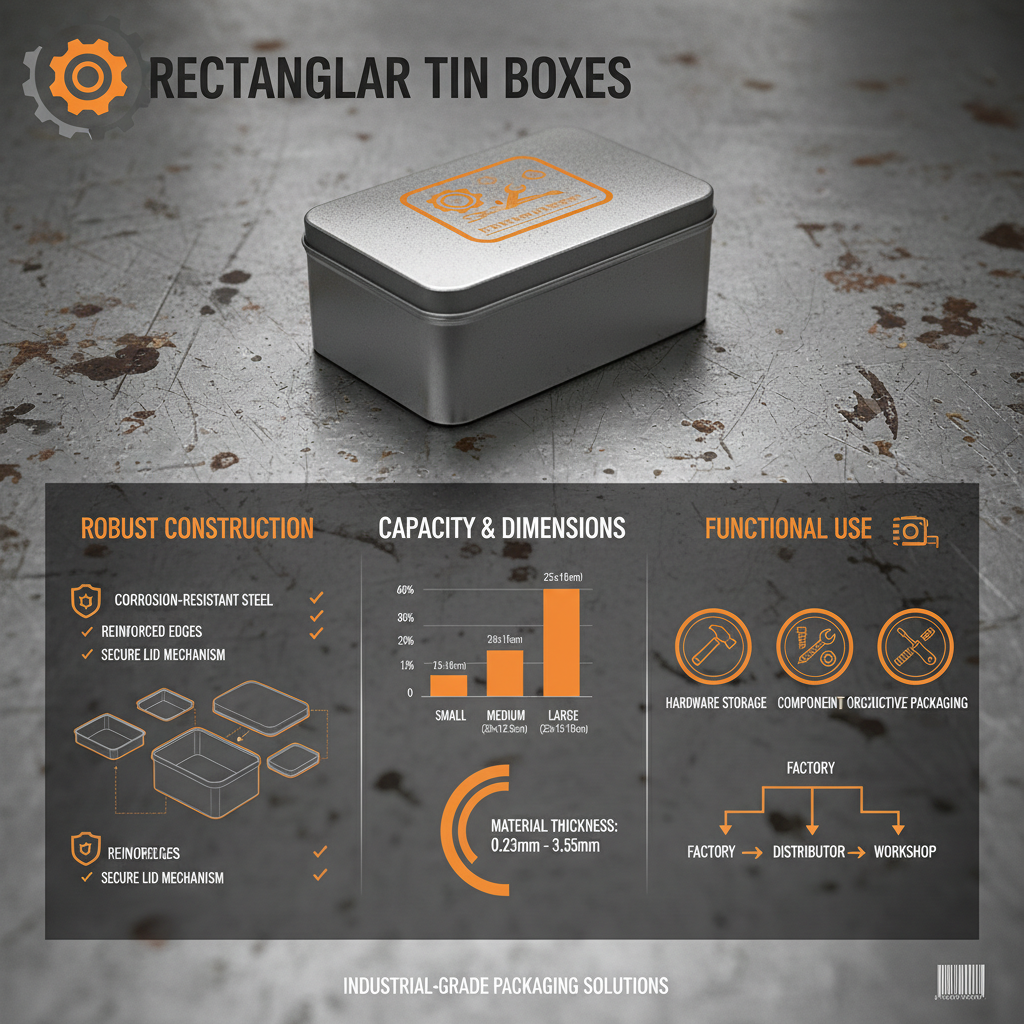
At its core, a rectangular tin box is a container fabricated from tinplate – a thin sheet of steel coated with tin. This coating prevents rust and corrosion, significantly enhancing the box’s lifespan and making it suitable for storing a wide variety of goods. The rectangular shape maximizes space efficiency in both storage and transportation, contributing to logistical advantages.
The manufacturing process typically involves cutting, shaping, and assembling the tinplate, often incorporating seams that are soldered or crimped to create a robust structure. Modern manufacturing also allows for intricate designs and features, like hinged lids and internal dividers, tailored to specific product requirements.
This seemingly simple construction ties directly into modern industrial and logistical needs. The ability to reliably and cost-effectively protect and transport goods remains paramount, and the rectangular tin box addresses these needs exceptionally well, particularly for items requiring secure and tamper-evident packaging.
Key Characteristics of rectangular tin box
One of the defining features of a rectangular tin box is its exceptional durability. Unlike many plastic alternatives, tinplate is highly resistant to crushing, impact, and punctures, ensuring the contents remain safe during handling and transit. This robust nature minimizes product damage and reduces losses throughout the supply chain.
Another key characteristic is recyclability. Tinplate is a highly recyclable material, contributing to a circular economy and reducing environmental impact. This aligns with growing consumer demand for sustainable packaging options, making tin boxes an attractive choice for eco-conscious brands. The steel can be repeatedly recycled without loss of quality, further enhancing its sustainability profile.
Furthermore, rectangular tin boxes offer excellent barrier properties. They effectively block out light, moisture, and oxygen, preserving the freshness, flavor, and quality of the contained products. This is particularly crucial for food items, pharmaceuticals, and other sensitive goods. The sealed nature of the box also prevents tampering, enhancing product safety.
Global Applications of rectangular tin box
The applications of the rectangular tin box are remarkably diverse, spanning across numerous industries worldwide. In the food and beverage sector, they are commonly used for packaging biscuits, chocolates, tea, coffee, and candies, protecting product freshness and enhancing shelf appeal.
Beyond food, rectangular tin boxes are prevalent in the pharmaceutical industry, safeguarding medications and ensuring compliance with stringent safety regulations. Cosmetics and personal care products also frequently utilize tin boxes for their elegant aesthetic and protective qualities. Industrial components, such as small hardware and electronic parts, benefit from the durable and secure nature of tin box packaging.
Market Share of Rectangular Tin Box Applications
Advantages and Long-Term Value of rectangular tin box
The advantages of using a rectangular tin box extend beyond its immediate protective capabilities. Cost-efficiency is a significant benefit, particularly when considering the box’s longevity and reusability. While the initial investment might be slightly higher than some plastic alternatives, the extended lifespan and reduced product damage can lead to substantial long-term savings.
From a sustainability perspective, the high recyclability of tinplate contributes to a reduced environmental footprint. Choosing tin boxes aligns with corporate social responsibility goals and appeals to environmentally conscious consumers. Moreover, the inherent strength and durability of the material contribute to product safety and minimize waste.
Future Trends in rectangular tin box Technology
Innovation in coating technologies is enhancing the corrosion resistance and aesthetic appeal of rectangular tin boxes. New coatings are being developed that are both more environmentally friendly and offer superior protection against external elements. This allows for thinner tinplate to be used, reducing material consumption and lowering production costs.
Digital printing advancements are also enabling greater customization and personalization options. High-resolution digital printing allows for intricate designs and variable data printing, catering to niche markets and creating unique packaging experiences.
Furthermore, the integration of smart packaging technologies, such as QR codes and NFC tags, is gaining traction. These technologies can provide consumers with information about the product's origin, ingredients, and recycling instructions, enhancing transparency and traceability.
Challenges and Solutions Regarding rectangular tin box
One of the primary challenges associated with rectangular tin boxes is the potential for corrosion if the tin coating is compromised. This can be mitigated through the use of advanced coating materials and rigorous quality control during manufacturing. Regular inspection and maintenance of the boxes can also help prevent corrosion.
Another challenge is the weight of tinplate compared to some plastic alternatives. However, this can be addressed by optimizing box design and utilizing thinner gauge tinplate where appropriate, without sacrificing structural integrity.
Finally, fluctuating tin prices can impact the cost of production. Establishing long-term contracts with suppliers and exploring alternative tinplate alloys can help mitigate price volatility. Investing in efficient manufacturing processes can also help reduce overall costs.
Summary of Challenges and Solutions Regarding Rectangular Tin Box Production
| Challenge |
Impact |
Proposed Solution |
Implementation Cost (1-10) |
| Corrosion of Tinplate |
Reduced product lifespan; compromised safety. |
Advanced coatings; quality control. |
6 |
| Weight Compared to Plastics |
Increased shipping costs; logistical challenges. |
Optimized box design; thinner gauge tinplate. |
5 |
| Tin Price Volatility |
Increased production costs; reduced profit margins. |
Long-term supplier contracts; alternative alloys. |
7 |
| Seam Integrity Concerns |
Potential for leaks or product contamination. |
Automated seam welding/crimping; rigorous testing. |
8 |
| Limited Design Complexity |
Difficulty achieving intricate shapes or features. |
Investment in advanced forming technologies. |
9 |
| Consumer Perception of Material |
Potential bias against metal packaging. |
Marketing education on recyclability and safety. |
4 |
FAQS
Rectangular tin boxes offer significant environmental advantages due to the high recyclability of tinplate steel. Unlike many plastics, tin can be recycled repeatedly without degradation, reducing landfill waste and conserving resources. The steel industry also employs efficient recycling processes, minimizing energy consumption. Furthermore, tinplate is naturally abundant and doesn’t contribute to microplastic pollution, making it a sustainable packaging choice.
While the initial cost of rectangular tin boxes can sometimes be higher than plastic alternatives, the long-term value is often superior. Their durability reduces product damage during transport and storage, minimizing losses. Their reusability, if designed for that purpose, further lowers costs. Additionally, the recyclable nature of tinplate can reduce waste disposal fees and potentially generate revenue through scrap metal sales.
Yes, rectangular tin boxes are highly customizable. Advanced printing technologies allow for vibrant, high-resolution graphics, logos, and designs to be applied directly to the surface. Embossing and debossing techniques can also be used to create tactile branding elements. Furthermore, the shape and size of the boxes can be tailored to specific product requirements, offering a truly bespoke packaging solution.
Absolutely. Rectangular tin boxes are widely used for food packaging due to their excellent barrier properties. They protect contents from light, moisture, and oxygen, preserving freshness and flavor. Food-grade coatings are applied to prevent interaction between the food and the tinplate, ensuring safety and compliance with relevant regulations.
The lead time for custom rectangular tin boxes varies depending on the complexity of the design, the quantity ordered, and the manufacturer's production schedule. Generally, expect a lead time of 4-8 weeks for a standard order. Larger orders or intricate designs may require a longer production time. It's best to contact a supplier to get a precise quote and timeline.
Selecting a reputable manufacturer with robust quality control procedures is crucial. Look for certifications such as ISO 9001, which demonstrate a commitment to quality management. Ensure that the manufacturer uses food-grade coatings (if applicable) and conducts thorough testing to verify the integrity of the boxes. Regular inspections of incoming materials and finished products are also essential.
Conclusion
In conclusion, the rectangular tin box remains a remarkably versatile and valuable packaging solution. Its combination of durability, recyclability, customization options, and protective qualities makes it an ideal choice for a wide range of industries. From preserving food and pharmaceuticals to protecting industrial components and enhancing brand aesthetics, the rectangular tin box continues to deliver significant benefits to businesses worldwide.
Looking ahead, advancements in coating technologies, digital printing, and smart packaging integrations will further enhance the appeal and functionality of these boxes. By embracing innovation and prioritizing sustainability, the rectangular tin box will continue to play a vital role in the evolving landscape of packaging solutions. Visit our website: www.packaging-help.com to learn more about our rectangular tin box options and how we can help meet your packaging needs.